
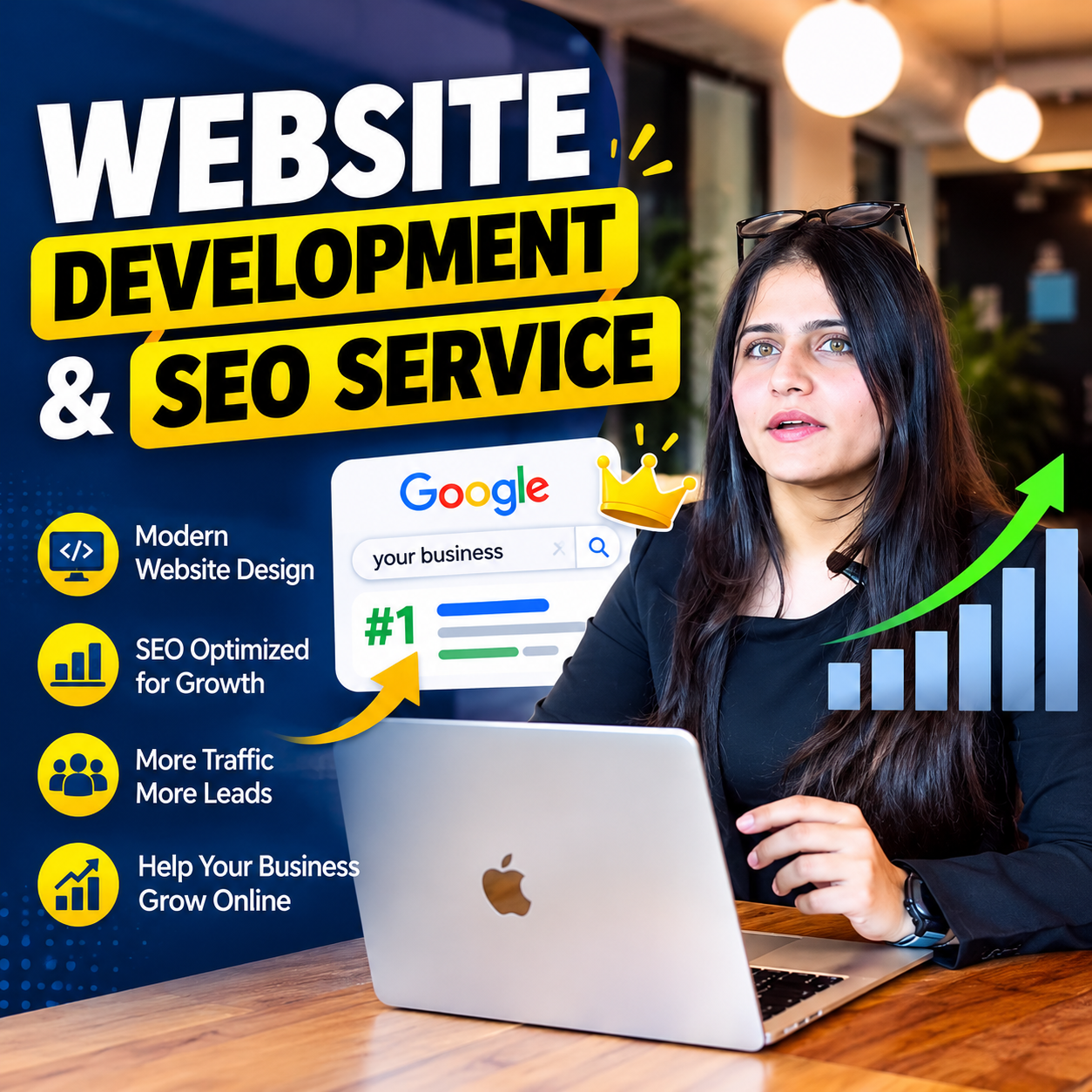
A Top-Rated WebsiteDevelopment & DigitalMarketing Agency
We build custom websites that strengthen your search rankings and attract more qualified traffic to grow your business.
Solutions for the
Digital Vanguard
From initial discovery to post-launch optimization, we provide end-to-end consulting and execution services that bridge the gap between business strategy and technology.
Website Design
We craft immersive digital identities that balance aesthetic elegance with functional precision. Our design philosophy focuses on creating intuitive user journeys that reduce friction and drive conversion across every possible touchpoint.
Explore Website DesignWebsite Development
Our engineering team builds high-performance, resilient web architectures using modern frameworks like React and Next.js. We prioritize clean code, lightning-fast load times, and enterprise-grade security to ensure your platform scales seamlessly with your business.
Explore Website DevelopmentSoftware Development
Bespoke business software, enterprise systems, and legacy modernisation — including custom ERP and CRM development — for companies that have outgrown spreadsheets and generic tools but don't need an enterprise price tag.
Explore Software DevelopmentMobile App Development
We deliver native and cross-platform mobile experiences that feel at home on any device. By focusing on performance optimization and platform-specific UX patterns, we ensure your mobile presence provides value even in low-connectivity environments.
Explore Mobile App DevelopmentSEO Services
We run structured, keyword-targeted SEO campaigns that get businesses ranking for the searches that actually convert. From technical audits to ongoing content strategy, our approach is built on measurable rankings and traffic growth, not vague promises.
Explore SEO ServicesDigital Marketing
Our data-driven marketing ecosystem goes beyond simple ads. We utilize advanced analytics and behavioral insights to craft targeted SEO, SEM, and content strategies that amplify your brand reach and maximize your marketing spend efficiency.
Explore Digital MarketingAI Automation
Custom AI integrations and workflow automation that save time and reduce manual work — built around how your business actually operates, not a generic chatbot bolt-on.
Explore AI AutomationBrands We've Worked With





Our Proprietary Solutions
We don't just build websites; we engineer proprietary software ecosystems that solve critical business challenges and improve organizational performance.

Performio
The ultimate performance orchestration platform for global teams looking to unify OKRs and culture.
Explore PerformioSectors We Transform
While our technical foundations are universal, we tailor our implementation to the unique compliance and operational requirements of each vertical.
Our Way of Operating
We follow a rigorous yet agile methodology designed to eliminate technical debt and ensure that every deployment delivers immediate business value.
Design Thinking
Empathizing with users to define complex problems and ideate innovative solutions.
Architecture
Crafting robust technical blueprints and scalable system frameworks for growth.
Development
Transforming designs into high-performance code using modern tech stacks.
Deployment
Seamless integration and launch through automated CI/CD pipelines.
Maintenance
Proactive monitoring and continuous evolution for long-term resilience.
Client Success Stories
Arvind Baloni
Managing Director @ TDS Company
"Performio has completely streamlined the way we manage performance across our organization. With over 200 employees, tracking goals, reviews, and productivity used to be complex. Now everything is centralized, transparent, and easy to manage. It has brought structure and clarity to our performance processes."
Amarpreet Kaur
CEO @ AYU-NIC
"The team built our complete e-commerce ecosystem from scratch, including payment gateway integration, shipping automation, and SEO marketing. They don’t just deliver a website — they handle the entire digital journey end-to-end. AYU-NIC’s online growth is a direct result of their dedicated support and strategy."
Anuj Aggarwal
CEO @ Altruist Company
"Implementing Performio has transformed how we track employee performance and organizational goals. The platform is intuitive, powerful, and perfectly suited for growing teams. It has helped us create a more accountable and performance-driven work culture."
Jagjit Singh
Client @ Inspire IQ Ltd
"We needed a reliable way to manage attendance across our academic centres. Seven Wealth developed custom attendance management software tailored to our needs, making it easier to record, monitor, and manage attendance in one place."
Lovish
Client @ THE HOME STYLE
"Seven Wealth developed our e-commerce store and supported us with SEO. The online store gives our customers a smoother way to explore and shop our products, while the SEO work helps improve our visibility in search."
Agrim Kalra
Client @ Fast Solutions
"Seven Wealth delivered a fast, professional website for our business. The design is clear and responsive, and the site makes it easy for visitors to understand our services and get in touch."
Arvind Baloni
Managing Director @ TDS Company
"Performio has completely streamlined the way we manage performance across our organization. With over 200 employees, tracking goals, reviews, and productivity used to be complex. Now everything is centralized, transparent, and easy to manage. It has brought structure and clarity to our performance processes."
Amarpreet Kaur
CEO @ AYU-NIC
"The team built our complete e-commerce ecosystem from scratch, including payment gateway integration, shipping automation, and SEO marketing. They don’t just deliver a website — they handle the entire digital journey end-to-end. AYU-NIC’s online growth is a direct result of their dedicated support and strategy."
Anuj Aggarwal
CEO @ Altruist Company
"Implementing Performio has transformed how we track employee performance and organizational goals. The platform is intuitive, powerful, and perfectly suited for growing teams. It has helped us create a more accountable and performance-driven work culture."
Jagjit Singh
Client @ Inspire IQ Ltd
"We needed a reliable way to manage attendance across our academic centres. Seven Wealth developed custom attendance management software tailored to our needs, making it easier to record, monitor, and manage attendance in one place."
Lovish
Client @ THE HOME STYLE
"Seven Wealth developed our e-commerce store and supported us with SEO. The online store gives our customers a smoother way to explore and shop our products, while the SEO work helps improve our visibility in search."
Agrim Kalra
Client @ Fast Solutions
"Seven Wealth delivered a fast, professional website for our business. The design is clear and responsive, and the site makes it easy for visitors to understand our services and get in touch."
Arvind Baloni
Managing Director @ TDS Company
"Performio has completely streamlined the way we manage performance across our organization. With over 200 employees, tracking goals, reviews, and productivity used to be complex. Now everything is centralized, transparent, and easy to manage. It has brought structure and clarity to our performance processes."
Amarpreet Kaur
CEO @ AYU-NIC
"The team built our complete e-commerce ecosystem from scratch, including payment gateway integration, shipping automation, and SEO marketing. They don’t just deliver a website — they handle the entire digital journey end-to-end. AYU-NIC’s online growth is a direct result of their dedicated support and strategy."
Anuj Aggarwal
CEO @ Altruist Company
"Implementing Performio has transformed how we track employee performance and organizational goals. The platform is intuitive, powerful, and perfectly suited for growing teams. It has helped us create a more accountable and performance-driven work culture."
Jagjit Singh
Client @ Inspire IQ Ltd
"We needed a reliable way to manage attendance across our academic centres. Seven Wealth developed custom attendance management software tailored to our needs, making it easier to record, monitor, and manage attendance in one place."
Lovish
Client @ THE HOME STYLE
"Seven Wealth developed our e-commerce store and supported us with SEO. The online store gives our customers a smoother way to explore and shop our products, while the SEO work helps improve our visibility in search."
Agrim Kalra
Client @ Fast Solutions
"Seven Wealth delivered a fast, professional website for our business. The design is clear and responsive, and the site makes it easy for visitors to understand our services and get in touch."

"Technology is the bridge between human ambition and global impact."
At Sevenwealth, we don't just deliver code; we deliver legacy. Our mission is to empower organizations with software that is as resilient as it is intuitive, ensuring that our partners are always equipped for the next era of digital transformation.
Ravi Prabhakar
CEO & Founder